
The correct use of lamps for reptiles
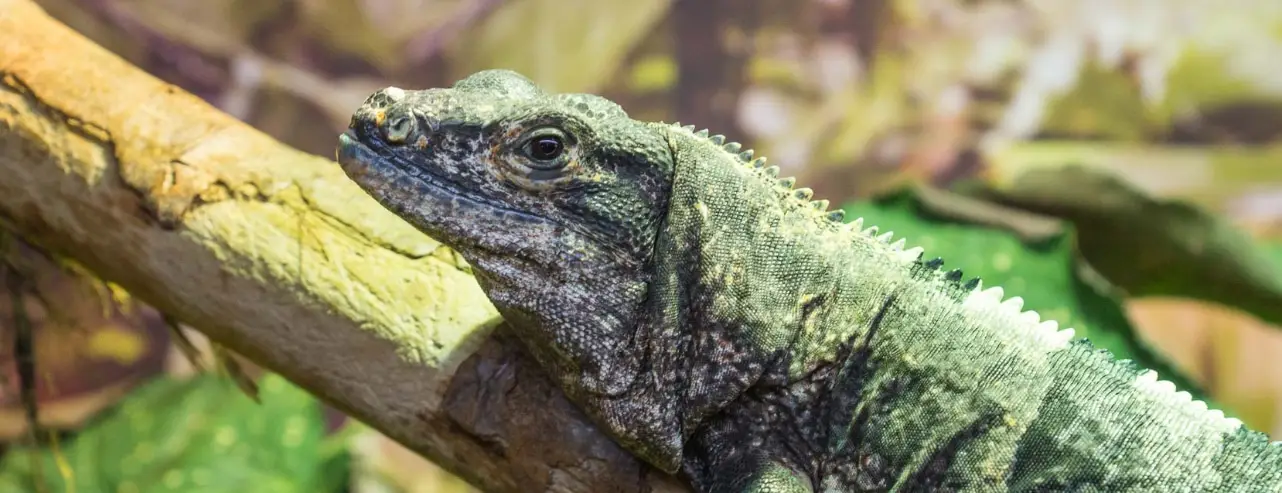
Keeping reptiles, whether for breeding or simply adopting a single pet, cannot do without the correct use of lamps. Lamps are an essential tool for giving our animals a healthy life that is as long as possible.
Reptiles are poikilothermic animals, meaning that they regulate their body temperature according to the temperature of the environment they live in.
The temperature of the terrarium that houses them and its humidity are therefore the two most important parameters to keep an eye on, whatever species of reptile you want to keep. But what are the best temperature and the best humidity for each individual reptile?
There is no single answer, because it depends on the environment the reptile in question comes from. We can therefore say that the best temperature is the one most similar to what it would find in the wild at different times of the year.
Only by knowing the range it comes from, and the temperature fluctuations that characterise it, can we give our pet the ideal thermal conditions. Online you can find many fact sheets for the different species, giving the ideal temperature ranges that can guide us in choosing the environmental parameters.
In general, however, we must remember that every reptile, whatever its species and the range it comes from, must be housed in an enclosure that provides a thermal gradient. This means that the temperature cannot be the same in every corner of the enclosure: you need to create a “hot zone” under the heat lamps and a “cool zone” away from them. In this way the animal can decide what temperature to expose its body to, depending on the metabolic phase it is going through (e.g. digestion, rest, shedding its skin, etc.). As an example, a hot zone at 32 °C and a cool zone at 20 °C give our reptile the two extremes of temperature, and the intermediate temperatures in the areas in between.
To guarantee the thermal gradient, it goes without saying that the lamps must all be placed at one end of the terrarium and not split between the two ends.
Lamps are ideal for all reptiles that, in the wild, usually warm up by basking in the sun. For reptiles that instead prefer to warm up by resting their body on warm surfaces (e.g. in the evening, on stones warmed by the sun during the day), consider using electric heating elements (e.g. heat mats) placed under the base of the terrarium.
There are two types of lamp: heat lamps and ultraviolet lamps.
Heat lamps serve only to give the animal warmth. There are white-light ones, red-light ones (infrared) and ceramic ones (which give off no visible light, only heat). The temperature under the lamp must always be measured, and it can be changed by raising or lowering the lamp or by changing its wattage. Lamps must never come into contact with the animals, to avoid burns. In this respect, it is well known that reptiles perceive heat differently from mammals, so they often coil around hot objects and burn themselves badly. So let us always place lamps behind guards to prevent burns.
Ultraviolet lamps help the production of vitamin D in its metabolically active form, a vitamin essential for absorbing and metabolising calcium. Animals that receive no direct sunlight and have no ultraviolet lamps available will be more prone to hypocalcaemia and to bone and joint deformities.
Heat lamps and ultraviolet lamps should be placed close together on one side of the terrarium. In this way the animal, drawn by the heat, will also receive the ultraviolet radiation that is so useful for its metabolism.
For some years now, lamps have been on sale that do both jobs: they give off heat and emit ultraviolet radiation.
Let us remember that there must be a temperature difference between day and night, so in heated rooms that keep a minimum temperature that is physiological for the species in question, the lamps must be switched off at night.
Let us also remember that many species need to brumate or hibernate, but that topic will be covered in another article.
More articles by our science communicators.
Care, diet and behaviour: the questions we are asked most often, explained in full.
- 01 Don’t feed the swans More and more often, even on our own beaches, we come across majestic long-necked, white-feathered waterfowl: adult mute swans ( Cygnus…
- 02 Notes on feeding snakes Snakes feed very differently from mammals, both in how they swallow and in what they eat. All snakes swallow their prey whole, without…
- 03 Hibernation in land tortoises Mediterranean tortoises ( Testudo hermanni, Testudo graeca, Testudo marginata ) are reptiles very commonly kept in Italian homes. Many…