
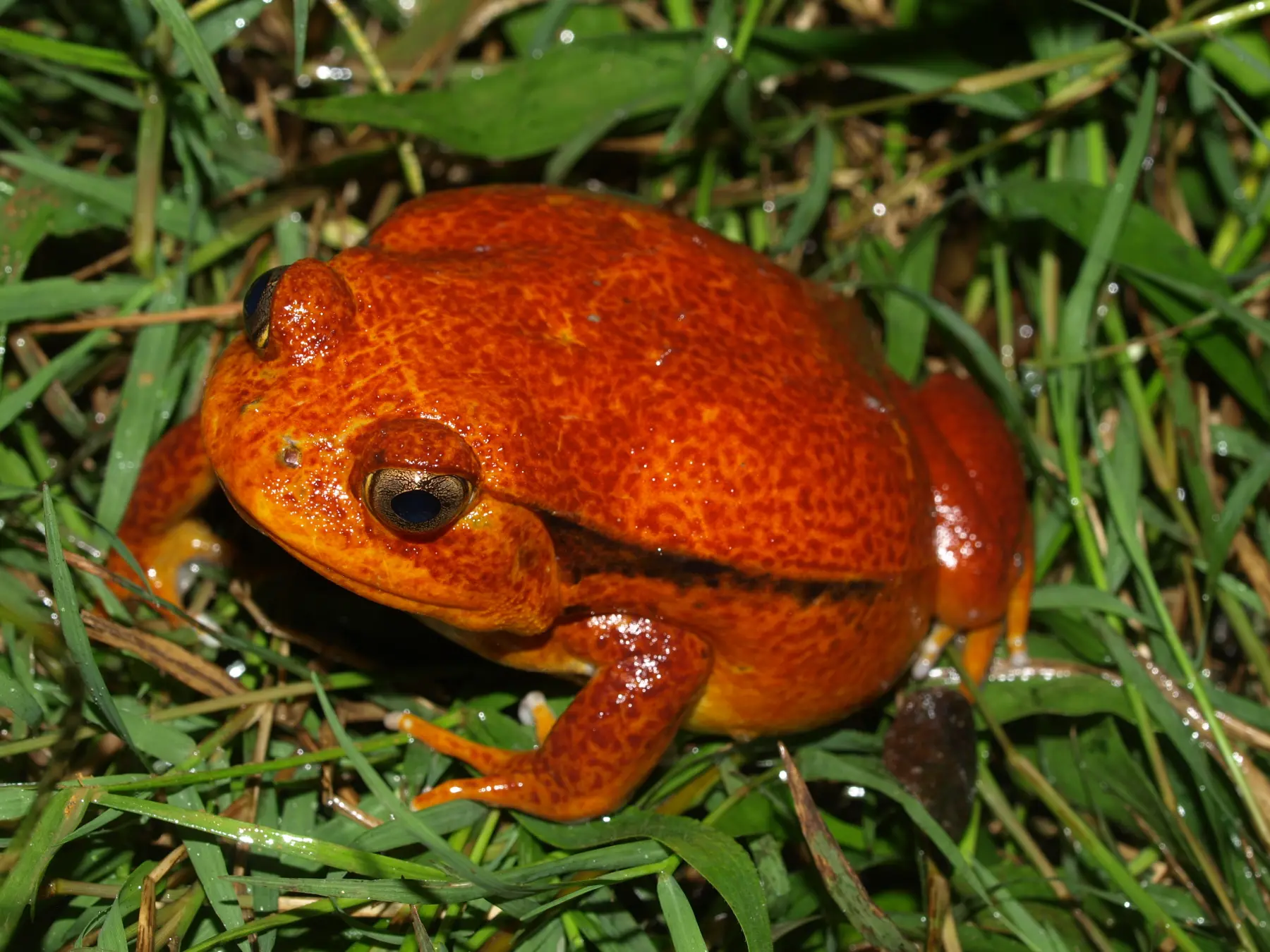
False tomato frog
Dyscophus guineti
IUCN Red List
LC Least Concern
Who it is
As often happens with amphibians, the lack of defensive weapons such as fangs and claws is balanced by the ability to secrete toxins that can discourage predators. In the case of this small frog, its bright red colour, which gives it its name, is meant precisely as a warning to anyone thinking of bothering it: “I'm poisonous, keep away!”.
For now, it is holding on.
Widespread and abundant: not in danger for now.
-
LC
Least Concern
False tomato frog
-
NT
Near Threatened
-
VU
Vulnerable
-
EN
Endangered
-
CR
Critically Endangered
The facts, in plain view.
Classification, distribution and habits: what you need to recognise it and to know where it comes from.
- Class
- Amphibia
- Family
- Microhylidae
- Distribution
- Madagascar
- Habitat
- Tropical forests
- Diet
- Small insects
- Size
- Up to 15-20 cm
Neighbours in Tropicarium.
89 species share this environment. Each one has its own card: scientific name, habitat, diet, conservation.
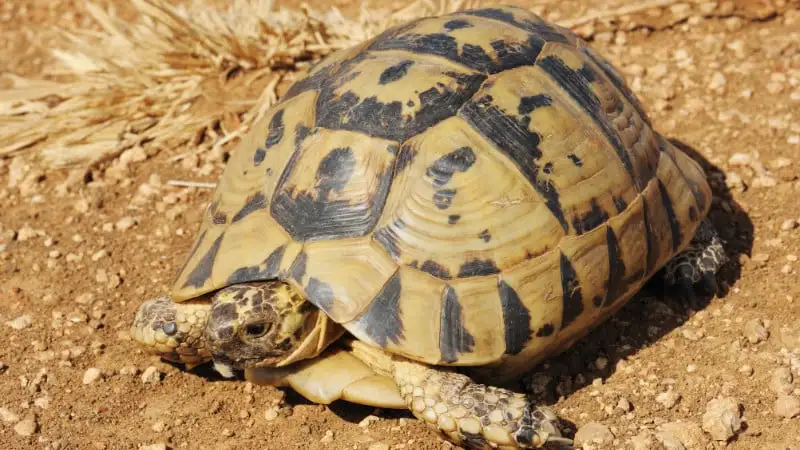 VU
Greek tortoise
Testudo graeca
Vulnerable
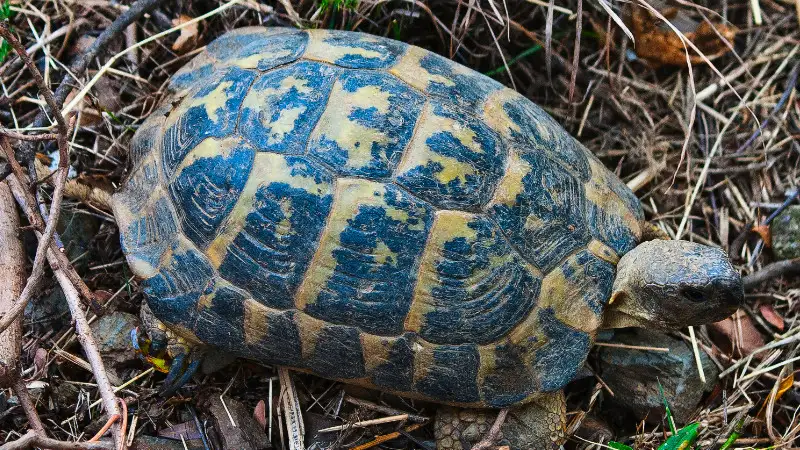 NT
Hermann's tortoise
Testudo hermanni
Near Threatened
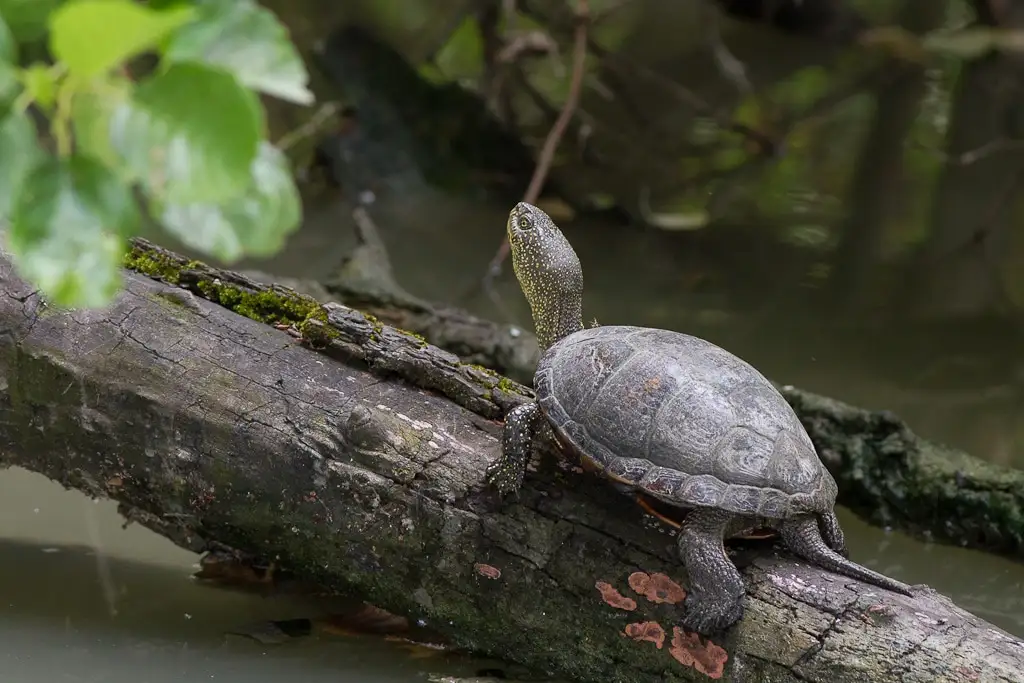 NT
European pond turtle
Emys orbicularis
Near Threatened
 LC
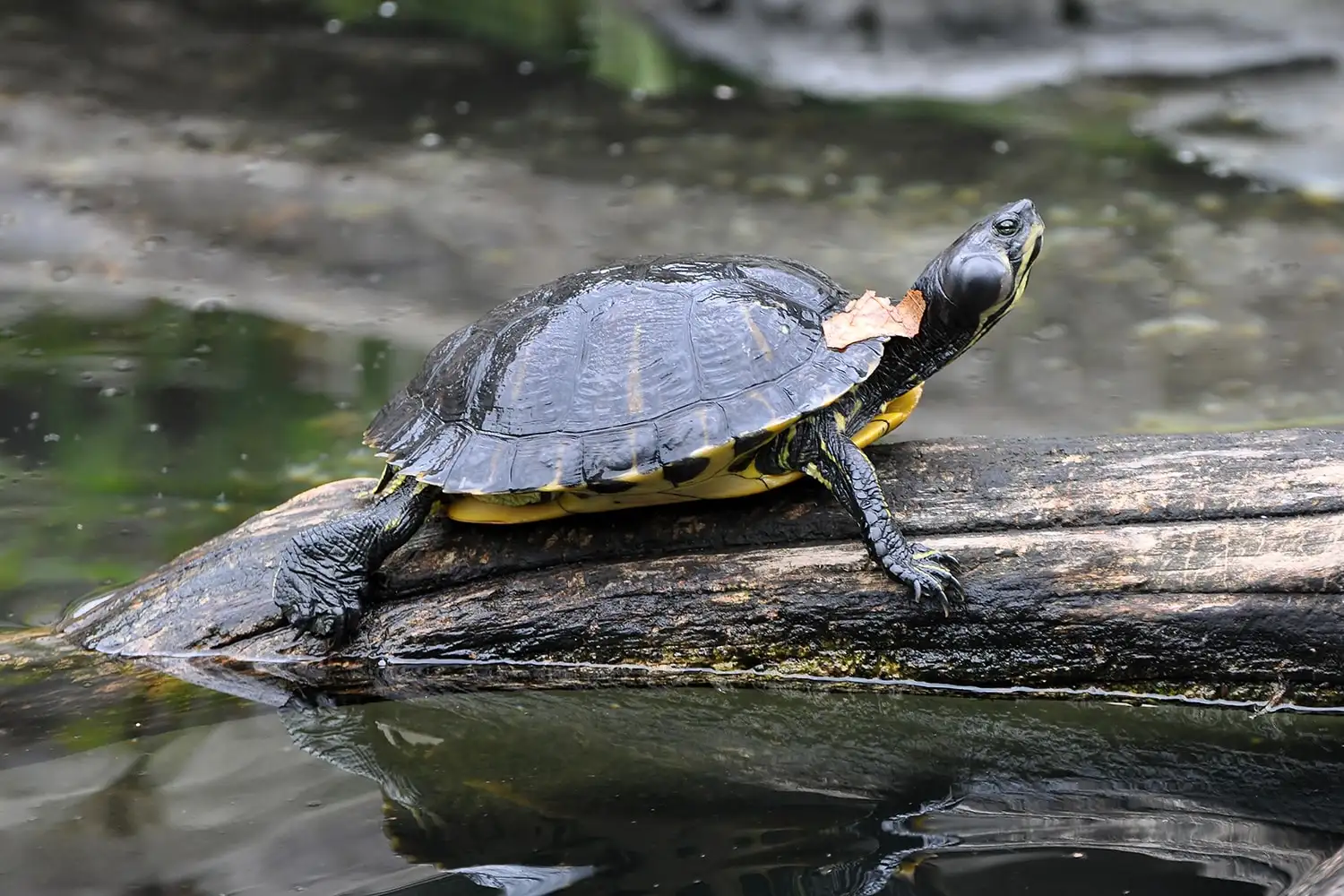
Pond slider
Trachemys scripta
Least Concern
 LC
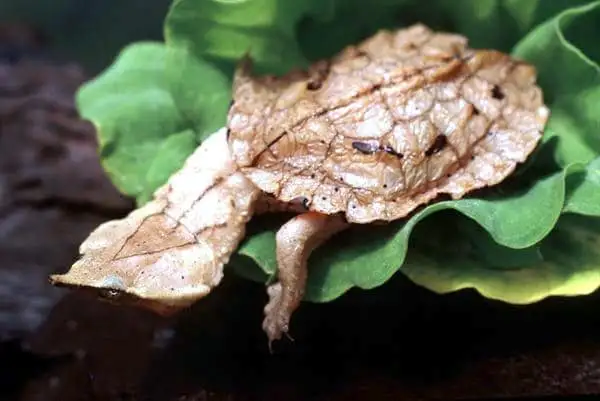
Amazon mata mata
Chelus fimbriatus
Least Concern
 LC
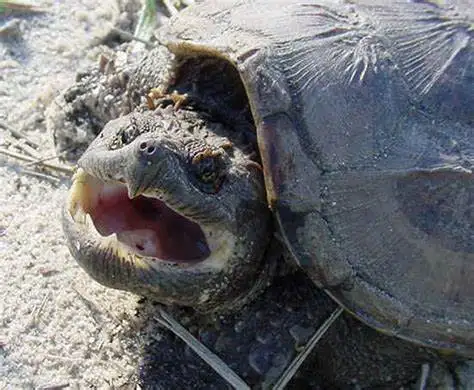
Common snapping turtle
Chelydra serpentina
Least Concern