
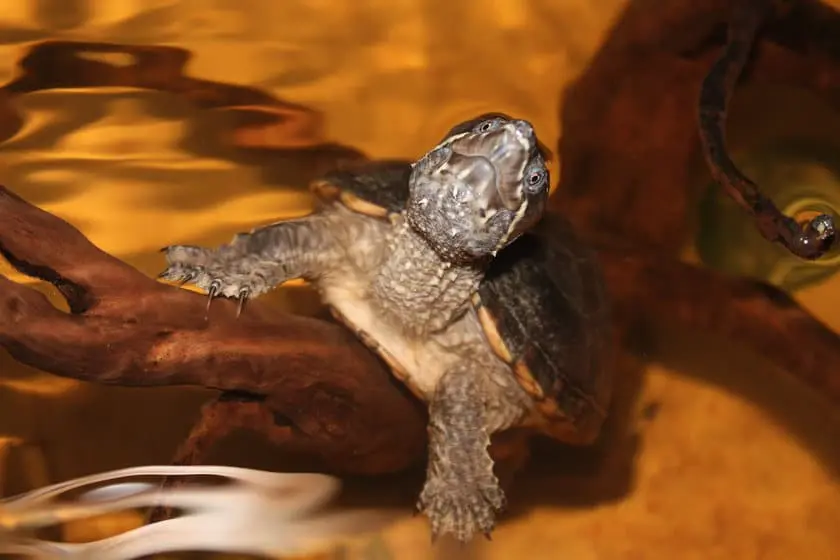
Common musk turtle
Sternotherus odoratus
IUCN Red List
LC Least Concern
Who it is
It owes its name to its ability to give off a musky, pungent-smelling substance, which helps to discourage predators. As it is active at dusk, its eyes have a very large pupil that lets it see well in low light.
For now, it is holding on.
Widespread and abundant: not in danger for now.
-
LC
Least Concern
Common musk turtle
-
NT
Near Threatened
-
VU
Vulnerable
-
EN
Endangered
-
CR
Critically Endangered
The facts, in plain view.
Classification, distribution and habits: what you need to recognise it and to know where it comes from.
- Class
- Reptilia
- Family
- Kinosternidae
- Distribution
- Canada and U.S.A.
- Habitat
- Shallow, calm waters with a muddy bottom
- Diet
- Fish, amphibians and aquatic invertebrates
- Size
- About 13 cm
Neighbours in Tropicarium.
89 species share this environment. Each one has its own card: scientific name, habitat, diet, conservation.
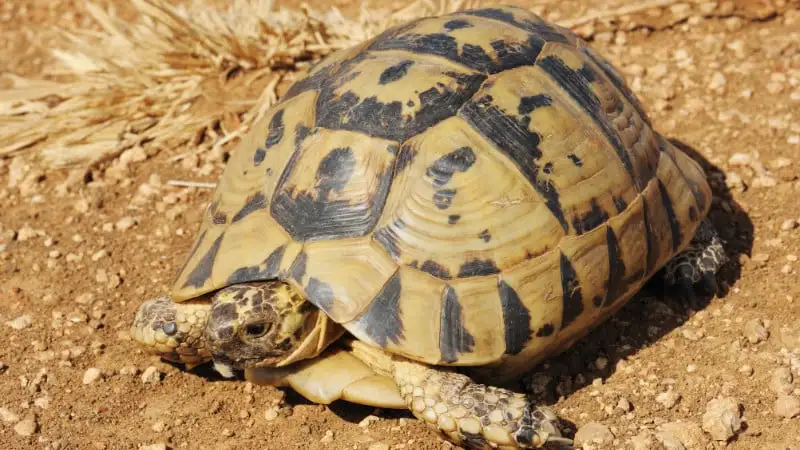 VU
Greek tortoise
Testudo graeca
Vulnerable
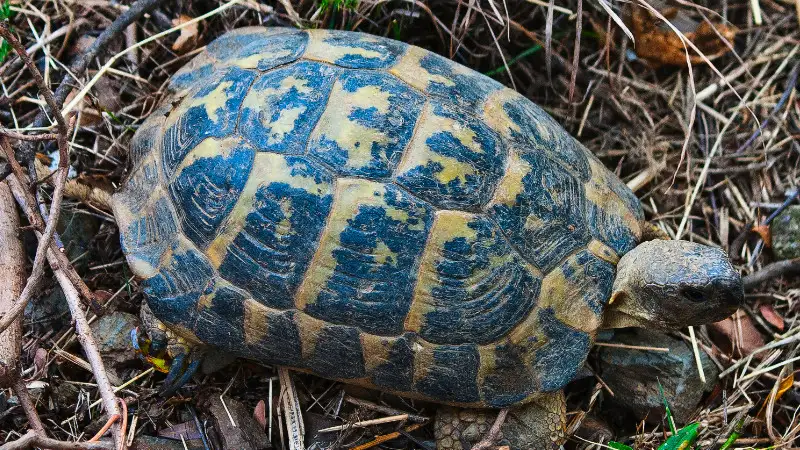 NT
Hermann's tortoise
Testudo hermanni
Near Threatened
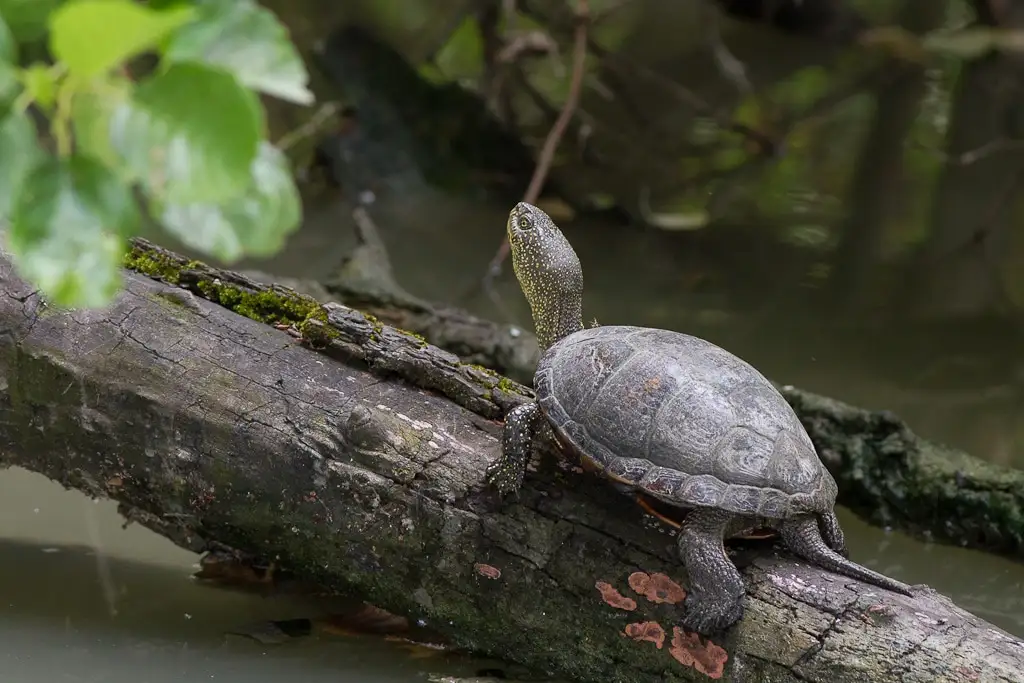 NT
European pond turtle
Emys orbicularis
Near Threatened
 LC
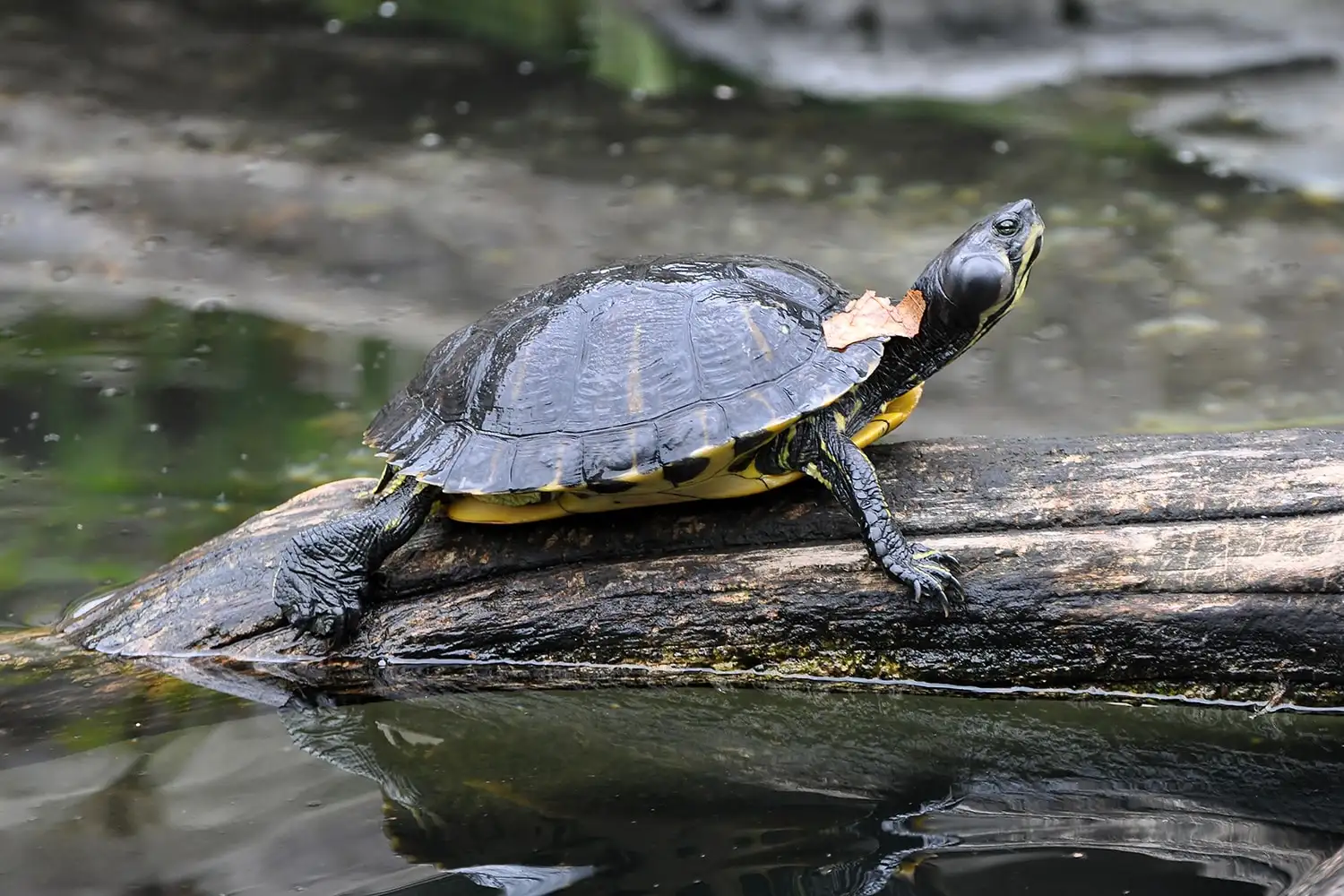
Pond slider
Trachemys scripta
Least Concern
 LC
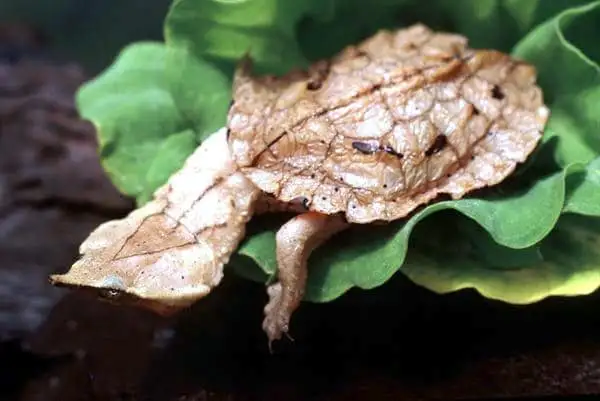
Amazon mata mata
Chelus fimbriatus
Least Concern
 LC
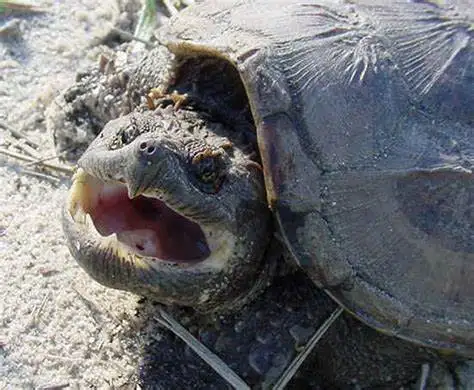
Common snapping turtle
Chelydra serpentina
Least Concern